

The Illusion of the Horizon
We are born into a world that feels permanent. We treat the ground as a stage, a static floor that exists only to support our dramas, our economies, and our human-driven plans. But if you walk into any Natural History Museum, that illusion quickly shatters. What we perceive as multi-generational stability is, in the eyes of the Earth, anything but.
The ground beneath us is not a “given.” It is not stagnant, it is, in fact, a wanderer… NEVER standing still.
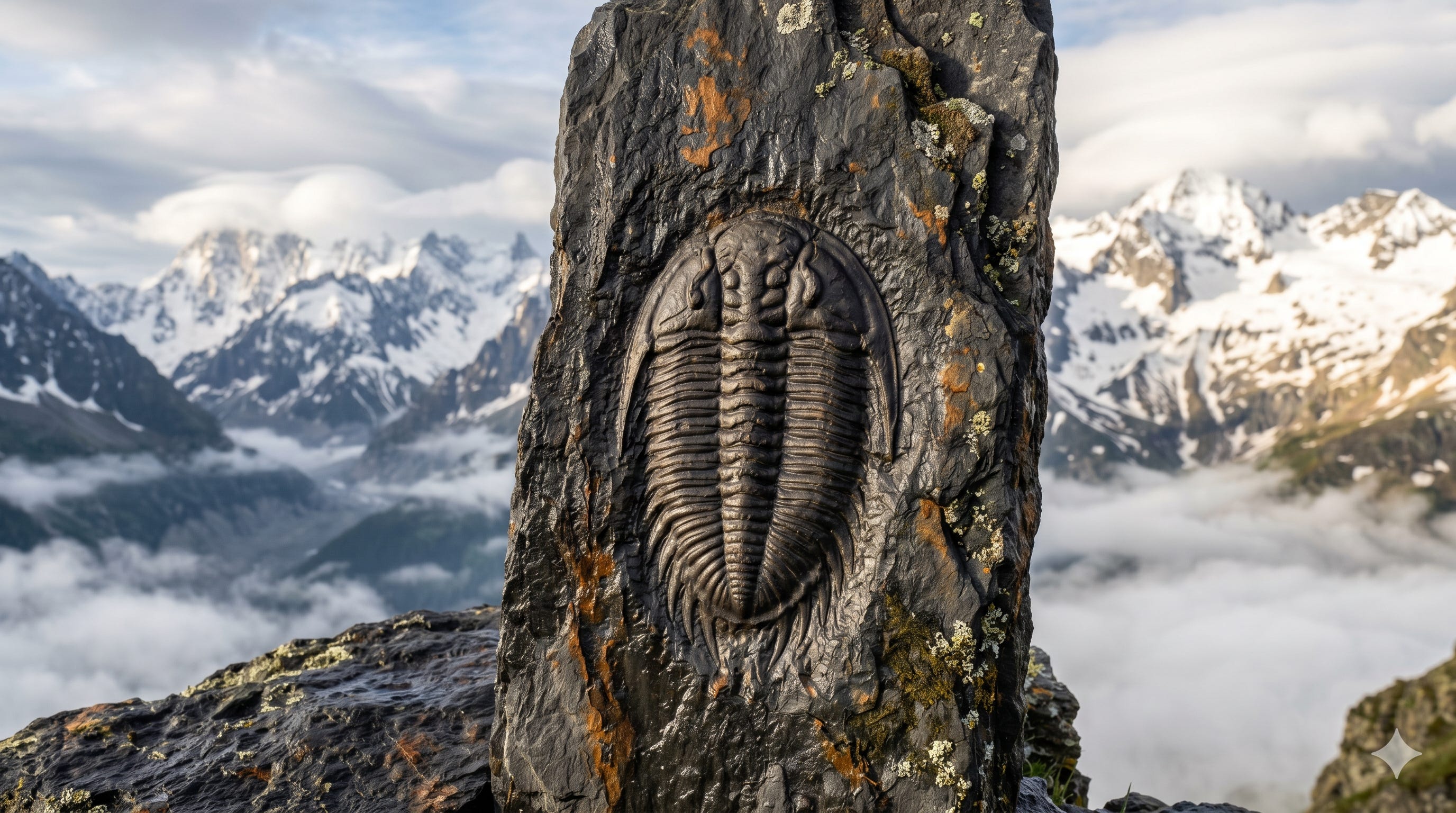
Embedded in the stone in Arouca, Portugal, we can find evidence of our Earth's evolution. Here, the largest trilobites ever found have been discovered. These armored giants do not belong in their modern climate. Instead, 465 million years ago, this chunk of the planet was a shallow, freezing sea sitting near the South Pole. They, along with the soil they were buried in, traveled thousands of miles across the expanse just to be here, now, high in the mountains.
As you drive through the countryside, you'll find further evidence of our evolution everywhere. From sedimentary rocks now standing completely vertical to the footprints of large dinosaurs once walking along a lagoon, now taking on unnatural angles high up in our tallest mountains.
These incredible sights are not exclusive to Portugal… Far from it. You can find examples in various degrees, ALL around our planet. Each outlines nature’s way of reminding us that “stability” is a temporary arrangement. And what seems stable or secure can always get flipped on its head.
Tectonic Behavior
We are going to explore the Earth’s crust. Our surface is made up of dozens of tectonic plates. They vary in size and shape, and while the fundamentals of their behaviors are the same, it is a mistake to think of them as having permanent personalities. Their behavior is not fixed; it is a fluid reaction to the weight they carry and the density they develop over time. Let’s explore what I mean:
1. The Rift
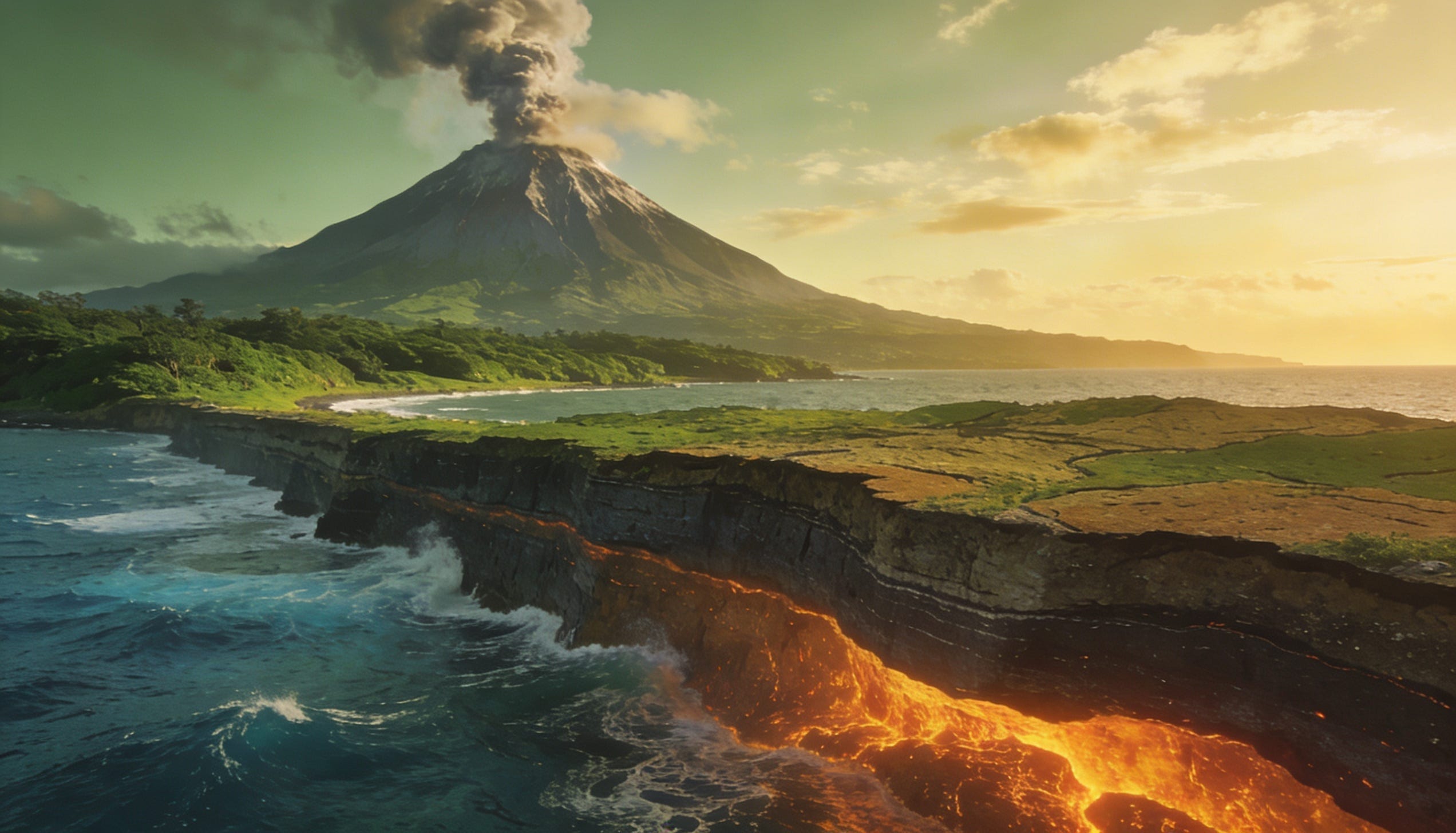
Firstly, plates are constantly in motion, but how? They can all be traced back, in one way or another, to an area called a “divergent plate boundary.” This is where the space between two plates has a “gap.” Magma naturally fills this gap. The introduction and cooling of this new material is where new crust is born. As it continues to grow, it pushes the plates farther apart. These boundaries are so powerful that they cause the full plate to move, along with influencing anything that plate comes in contact with.
2. The Slide
As our plate moves, it naturally rubs against other plates, creating friction. Think of the San Andreas Fault in California. This is where two plates pass each other. You can imagine them as people passing through an incredibly crowded concert. As they try to move forward, they bump into each other, get squished and stuck, have to push through, and eventually break free. When this happens to our plates, they trigger earthquakes, some large enough to level cities. This can be absolutely devastating to those directly affected. However, when you zoom out and look at the Earth through a wider lens, the map is still the same. San Francisco is still on the coast; the mountains haven’t moved, and whether we are ready to accept it or not, this is a manageable crisis; while difficult, life can, and will, adapt and rebuild between tremors.
3. The Subduction Zone
Let's look at what happens when our plate hits another head-on. If it can no longer go horizontally, it must go vertically. There are only two possible directions here… Up, or Down. Whichever plate is less buoyant will naturally subduct, or fall under, the other. This creates a feeder relationship between the two plates. As the bottom plate descends, it begins to heat up, returning to magma. This magma will then add to the top plate through volcanic activity. It increases the top plate's density, creating a stronger, more buoyant plate. Buoyancy is what will add to the plate's likelihood of “staying on top.”
4. The Collision
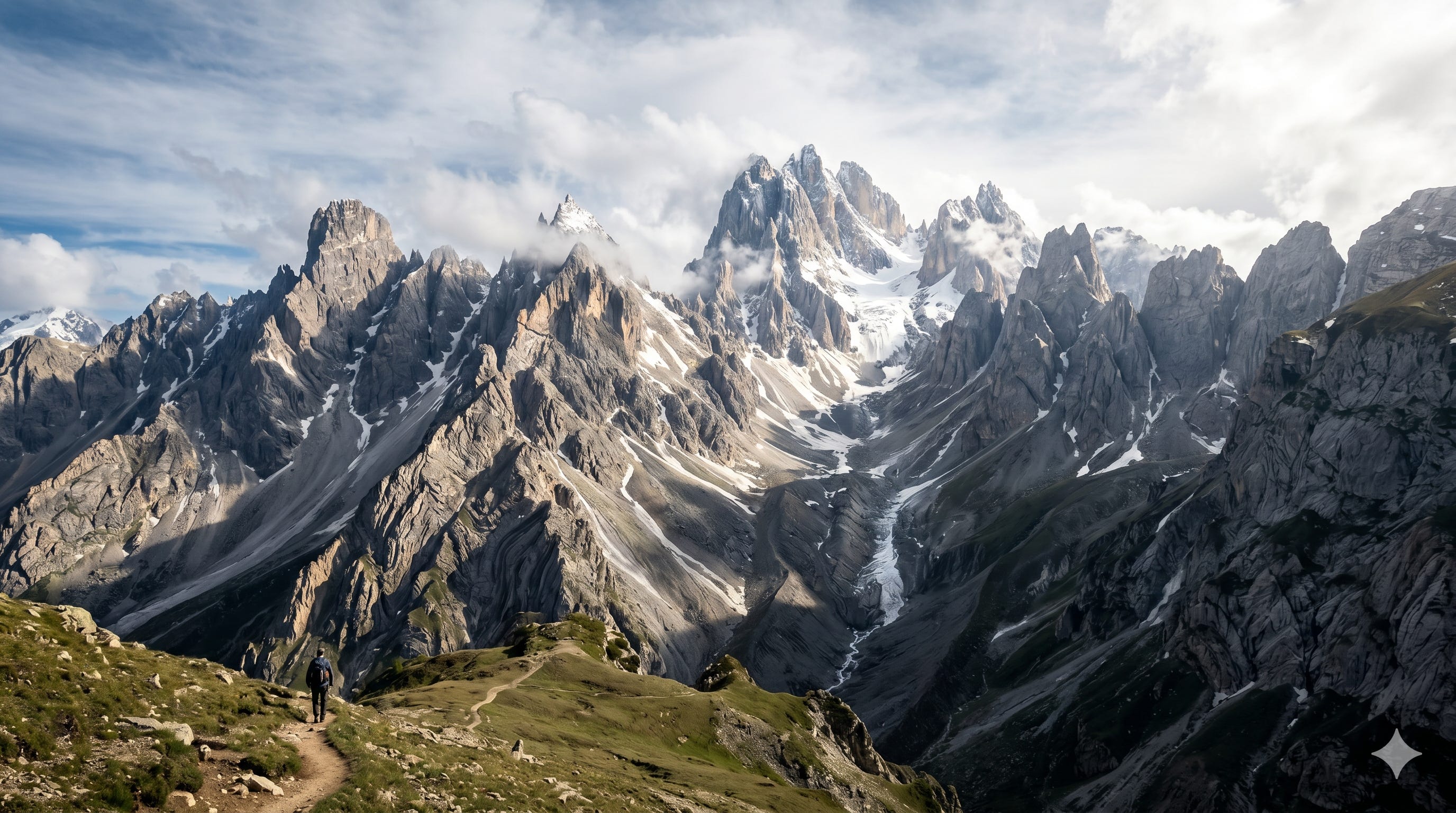
But what happens when two plates meet, and they have equal buoyancy? Well, this creates a full-blown collision. Think of the Himilayahs. Because neither plate is able, or willing to subduct, the horizontal flow stops, the stone begins to groan, and the world goes completely Vertical. The “old world” is officially gone. The sea creatures who moments ago were enjoying the shallows are now baking in the scorching sun. No matter how far you zoom out, the landscapes are different now, and the maps have changed. Rebuilding, as things were before, becomes impossible.
It is important to note that here on this planet, no single tectonic plate is “winning.”
There is no “power” that successfully expands on all fronts, overtaking all the plates it interacts with. Instead, every plate, no matter how massive or minuscule, is experiencing some combination of these four tectonic dynamics at the exact same time across its various borders… Whether they want to admit that or not.
This lesson is an important reminder to better understand human and government behavior, as we will explore through the geopolitical lens below.
The Collision or the Scrape?
The Airlock helps us better understand the frictions currently occurring between the U.S. and Iran. What we see are two “plates” that refuse to subduct beneath the other. This is a full-on collision…. or is it?
Option 1: The Full Collision
As we explored above, a collision is a violent, volatile, and monumentally unpredictable dynamic. The energy between these two competing forces is focused on the edges, crumpling and destroying "the “old” world through active war. This is a visible, violent rewrite of the map and is the most recognizable form of a global reset.
Option 2: The Flat-Slab Scrape
This is a more deceptive collision. Whether obvious or not, one plate IS being pushed under the other, but refuses to sink into the deep. Instead, it stays buoyant and scrapes along the underside of the other plate like a massive sheet of sandpaper.
Because the plates are so “tightly coupled,” the usual feeder dynamics, volcanoes of growth and exchange, shut down. On the surface, it might look like a stalemate, or even a victory, but underneath, the friction is creating an invisible and dangerous pressure buildup. This pressure, when released, forces the plate above to snap, creating mountains far inland, away from the front lines. This can be seen as domestic unrest, regime-change operations, and radicalization. It is a mountain range being built within the system, reshaping the territory from within… from below.
The 10-Meter Vertical Correction
Whether we are dealing with a collision or a scrape, the physics are the same. The pressure is loading a spring. And when that spring is released, all the potential energy stored within it will also be released. This is called the Elastic Limit, creating an Elastic Rebound.
A rebound is not a slow shift. This is a human-scale event. It can happen in the blink of an eye. In a single, bone-shaking second, the plates “spring” to a new position to relieve the stress. This is governed by Hooke’s Law, the math of a system pushed to its breaking point.
When the Elastic Limit is hit, the ground doesn’t just vibrate; it displaces. It can jump 10 meters vertically, the height of a three-story building, instantly. In a Collision, the snap happens at the border. In an Internal Scrape, the snap happens inside the top plate, thrusting up new “mountains” where no one expected them.
This Snap is a vertical correction. In that one second, your perspective is flipped 180°. What you thought was a stable “floor” is now a wall. You are standing in a landscape you no longer recognize, where the old rules of “horizontal” life no longer apply.
The Adaptive Mandate
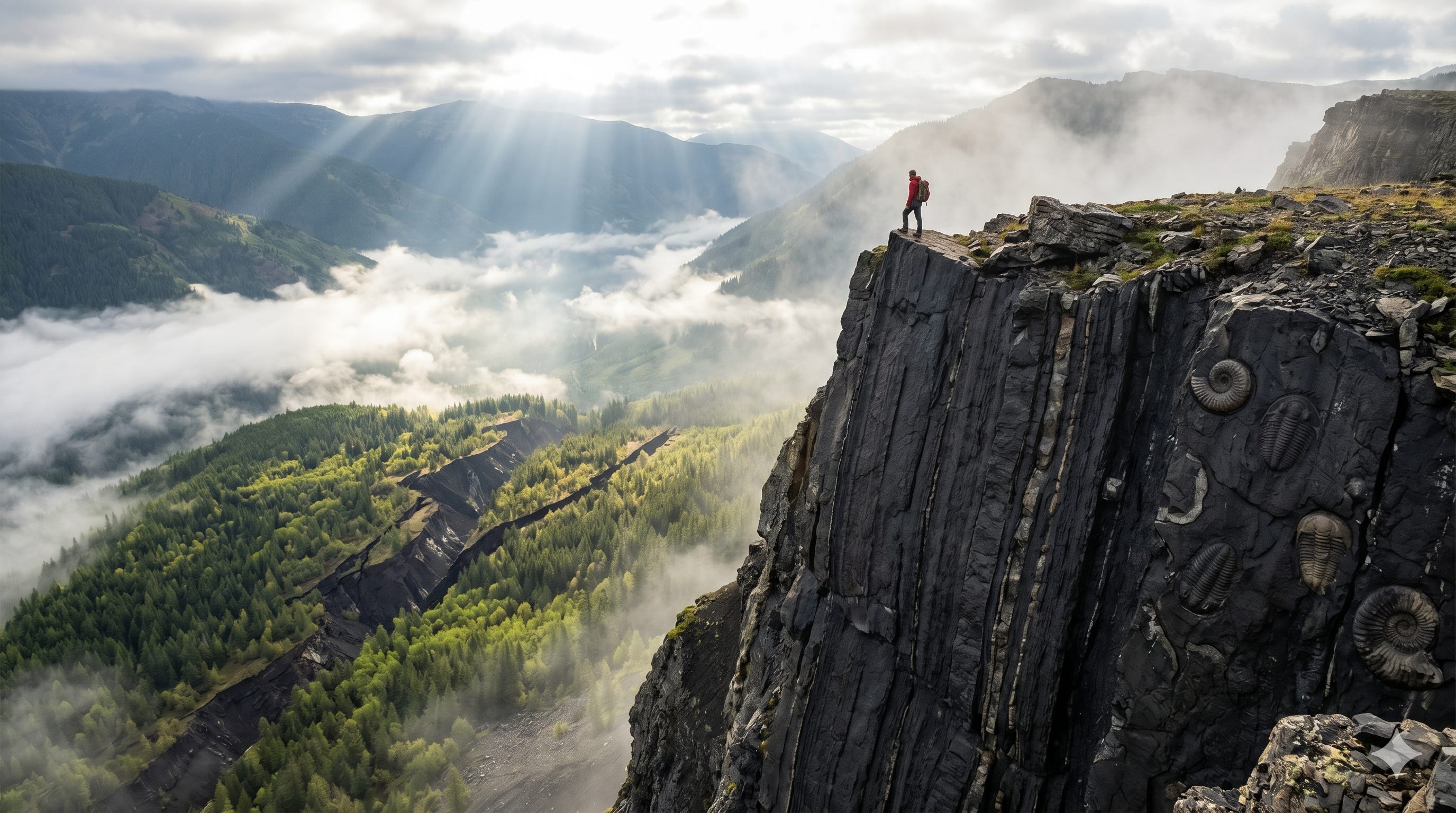
When the ground tilts and the “ocean” you used to swim in suddenly vanishes, many will become fossils. They will be found millions of years from now, etched into the side of a mountain they didn’t see coming, simply because they were unprepared, or determined to wait for the world to “go back to normal.”
But there are those who see the patterns before the snap. These aren’t just “survivors”; they are the ones who grab their hiking boots while everyone else is still looking for their swimsuits. They are the ones who understand that the terrain has changed and are confident enough to move forward and map it.
These “Masters of the Terrain” aren’t seeking power; they are the ones who understand the new geography clearly enough to be able to adapt, shine a light on where we are going, and are willing to take risks to better the communities that are resilient enough to grow in this new world.

THE AIRLOCK DECRYPTION KEY
The ancient, vertical rocks of Portugal aren’t just a history lesson; they are a mirror for the pressure we are feeling right now. If you want to see how these natural “moves” match up with the actual events Peter has been mapping, use this key to connect the physics of the earth to the data in his dispatches:
The Rift (The Severing): Peter explains how pulling apart global energy and labor lines has pushed every system on the planet into an inevitable collision course — (Ref: The Math They Are Hiding)
The Subduction (The Substrate Trade): The final attempt to keep the machine moving by swapping Western tech for Eastern energy before the subductive floor runs out. — (Ref: How a Single Microchip in Taiwan Stops World War III)
The Flat-Slab Scrape (The Internal Bruise): The result of one plate refusing to sink, instead building mountains of domestic unrest and “kinetic rot” inside our own borders. — (Ref: Telemetry Error)
The Collision (The Structural Deadlock): The moment horizontal diplomacy stops and the system shifts from “Global Police” to “World Landlord”. — (Ref: Why the Era of Global Policing Just Ended)
The 10-Meter Jump (The Kinetic Fracture): The bone-shaking second the spring breaks and the sudden, physical stoppage of global trade flips every map on its head. — (Ref: The 2026 Singularity)
The Adaptive Mandate (The Cellular Citadel): The engineering blueprints for building independent, resilient hubs once the old world tilts and the water vanishes. — (Ref: The Phoenix Protocol)
If you can see the pressure building on a global scale, it’s time to locate the friction in your own life. The geopolitical moves we have mapped out are currently loading a spring within your community, your career, and your personal life.
We don’t just point at the new mountains; we give you the tools to measure the potential energy stored beneath your feet. If you are ready to stop being a passenger on a wandering world and start drawing your own map, access the audit below. We’re going to calculate your personal Elastic Limit before the 10-meter jump occurs.
Become a Paid Subscriber to Access The Seismographic Audit, along with every other tool here at The Field Guide
